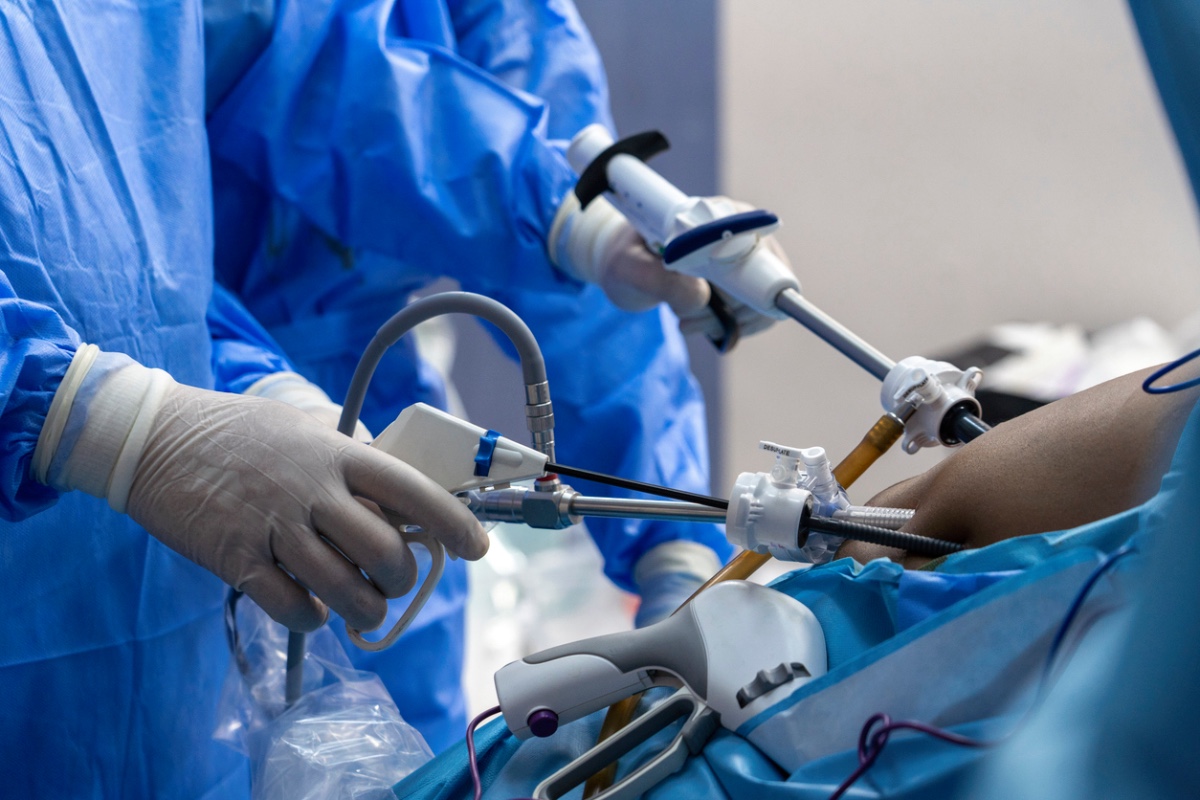
Laparoscopic surgery has become the standard approach for many general surgical and gynecological procedures due to reduced surgical trauma, shorter hospital stays, and faster recovery compared with open surgery (Della Corte et al., 2022). However, the physiological perturbations induced by pneumoperitoneum and patient positioning in laparoscopic surgery present the anesthesiologist with challenges distinct from those of open surgery, and the choice of anesthetic technique must be tailored accordingly (Gerges, Kanazi, & Jabbour-khoury, 2006).
When performing laparoscopic surgery, gas is used to slightly inflate the abdomen and create space for the surgeon to see and operate. Carbon dioxide remains the preferred insufflation gas because it is rapidly cleared and does not support combustion, but its peritoneal absorption produces hypercapnia and activates the sympathetic nervous system, increasing heart rate, blood pressure, and myocardial irritability (Gerges et al., 2006). Elevated intra-abdominal pressure has complex, pressure-dependent cardiovascular effects: at lower pressures venous return may transiently increase, while pressures above roughly 15 mmHg compress the inferior vena cava and reduce cardiac output (Gerges et al., 2006). Respiratory mechanics are similarly affected, with cephalad diaphragmatic displacement reducing functional residual capacity and compliance, effects that worsen in the presence of steep positioning and pre-existing pulmonary disease (Gerges et al., 2006). These changes underscore the need for vigilant intraoperative monitoring, including end-tidal carbon dioxide, airway pressure, and, in higher-risk patients, arterial blood gas analysis (Gerges et al., 2006).
General anesthesia with endotracheal intubation and controlled ventilation remains the safest and most widely used anesthetic technique in laparoscopic surgery, particularly for prolonged or upper abdominal procedures, and is recommended when pneumoperitoneum pressures exceed 12 mmHg or operative time is extensive (Vretzakis, Bareka, Aretha, & Karanikolas, 2013). Balanced techniques using short-acting volatile agents or propofol infusions, combined with ultrashort-acting opioids such as remifentanil, support rapid recovery and fast-track discharge protocols (Gerges et al., 2006). Notably, laparoscopic procedures may produce more intense pain in the immediate postoperative period than laparotomy, despite the overall reputation of laparoscopy as less painful, a finding attributed to peritoneal irritation, diaphragmatic stretch, and residual pneumoperitoneum rather than to inadequate intraoperative analgesia (Ekstein, Szold, Sagie, Werbin, Klausner, & Weinbroum, 2006).
Regional anesthesia, including spinal, epidural, and combined techniques, has been increasingly explored as an alternative for select patients, particularly those with significant pulmonary or cardiac comorbidity for whom general anesthesia carries elevated risk (Vretzakis et al., 2013). Retrospective series report low conversion rates to general anesthesia when high sensory blockade is achieved, though shoulder pain from diaphragmatic irritation remains a persistent limitation and a common reason for conversion (Vretzakis et al., 2013). A systematic review comparing spinal and general anesthesia specifically for gynecological laparoscopy found no consistent advantage of spinal anesthesia in operative time, nausea, or postoperative pain, with results varying considerably between studies, and concluded that the heterogeneity of available data means spinal anesthesia cannot be determined to be superior (Della Corte et al., 2022).
Multimodal postoperative analgesia is central to optimizing recovery after laparoscopic surgery regardless of anesthetic technique chosen. Local anesthesia at incision sites and intraperitoneal instillation, particularly when administered preemptively, has shown benefit in reducing early postoperative pain and opioid requirements, though the evidence for intraperitoneal instillation remains inconsistent across trials (Ortiz & Rajagopalan, 2014). Regional adjuncts such as transversus abdominis plane blocks and paravertebral blocks show promise but require further high-quality study before their role can be firmly established (Ortiz & Rajagopalan, 2014).
Anesthetic planning for laparoscopic surgery requires careful consideration of patient comorbidities, procedure duration and complexity, insufflation pressure, and positioning requirements. While general anesthesia remains the default for most cases, regional techniques continue to be explored, and multimodal analgesia continues to be a beneficial approach to pain management.