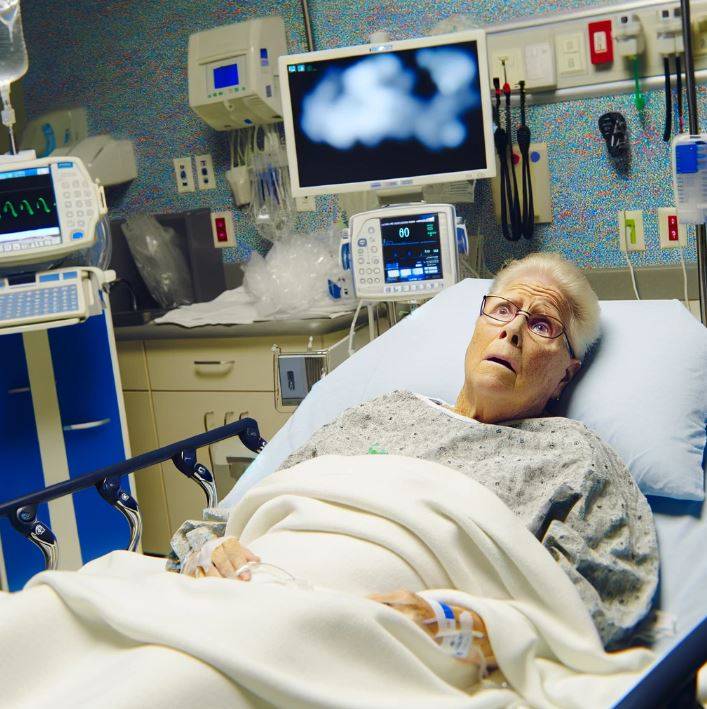
Perioperative neurocognitive disorders (PNDs) — including postoperative delirium and postoperative cognitive dysfunction — represent one of the most common postoperative complications among older adults. These conditions manifest as confusion, disorientation, delirium, and lasting cognitive decline, and they are not simply byproducts of aging or anesthetic drug effects. The underlying cause is increasingly understood to be neuroinflammation triggered by surgical tissue trauma — a discovery with significant implications for how we prevent and treat these debilitating complications.
The Injury Signal: Damage-Associated Molecular Patterns
When surgery causes tissue damage, dying and stressed cells release endogenous molecules called damage-associated molecular patterns (DAMPs). These molecules act as danger signals, activating innate immune pathways throughout the body. The inflammatory cascade they trigger is not confined to the surgical site — it affects multiple organ systems, and the brain is particularly vulnerable.
The systemic inflammatory response following surgery can breach the blood-brain barrier, activate resident immune cells in the central nervous system, and initiate a neuroinflammatory process that disrupts normal cognitive function.
Complement System Activation
One key pathway involves the complement system — a branch of innate immunity. Surgical trauma elevates C-reactive protein and activates complement component 3 (C3). Research in orthopedic surgery mouse models shows that C3 levels were significantly increased in hippocampal astrocytes following surgery. The hippocampus, critical for memory consolidation, is particularly sensitive to complement-mediated damage. Importantly, blocking C3 receptors in these models improved memory function — identifying a potential therapeutic target.
Coagulation Cascade and Fibrin Invasion
Surgical trauma also activates the coagulation cascade, converting fibrinogen to fibrin. Under normal circumstances, the blood-brain barrier prevents fibrin from entering the CNS. But when neuroinflammation and surgical stress compromise barrier integrity, fibrin can gain access to brain tissue.
Once in the CNS, fibrin binds to C3 receptors on microglia, amplifying immune cell activation and exacerbating cognitive deficits. Studies have documented perivascular fibrin deposits in brain tissue within 24 hours post-surgery — a remarkably rapid timeline. These deposits may persist for days to weeks, prolonging the neuroinflammatory state.
Blood-Brain Barrier Alteration
The blood-brain barrier (BBB) — which normally maintains CNS homeostasis by carefully regulating what enters the brain — is compromised by the systemic inflammatory mediators released following surgery. This compromise creates a feedback loop: BBB disruption allows more inflammatory molecules and immune cells to enter the brain, which further drives neuroinflammation, which further damages BBB function.
Patients with evidence of BBB injury following surgery experience prolonged neuroinflammation and greater cognitive decline than those without such injury — underscoring the BBB's role as both a target and a mediator of post-surgical neurological complications.
Microglial Activation
Microglia are the brain's resident immune cells, and they respond rapidly to the signals of surgical injury — both direct and indirect. Following surgery, microglia activate within hours, adopting inflammatory phenotypes that release pro-inflammatory cytokines including TNF-α, IL-1β, and IL-6. These cytokines disrupt synaptic transmission, impair neuroplasticity, and in sustained or severe cases, promote neuronal apoptosis.
The expression of TREM2 — a microglial receptor associated with both neuroinflammation modulation and neurodegenerative disease susceptibility — contributes to heightened inflammatory responses following surgery. TREM2's connection to aging and neurodegeneration suggests a mechanism by which older surgical patients are disproportionately vulnerable to post-surgical cognitive decline.
Therapeutic Directions
Understanding these mechanisms has opened several promising therapeutic avenues:
- Specialized pro-resolving lipid mediators (SPMs): These endogenous molecules actively resolve inflammation rather than merely suppressing it. Research suggests SPMs may shorten the duration of acute neuroinflammation following surgery without impairing the protective aspects of the immune response
- Dexmedetomidine: Alpha-2 agonist with documented anti-neuroinflammatory effects that may reduce postoperative delirium in perioperative use
- Regional anesthesia: Reducing the systemic stress response through regional techniques may attenuate the central neuroinflammatory cascade
- Minimizing surgical trauma: Laparoscopic and minimally invasive approaches produce smaller DAMP signals than open surgery
These approaches remain under active clinical investigation, but the growing mechanistic clarity surrounding post-surgical neuroinflammation suggests that meaningful, targeted interventions are within reach.