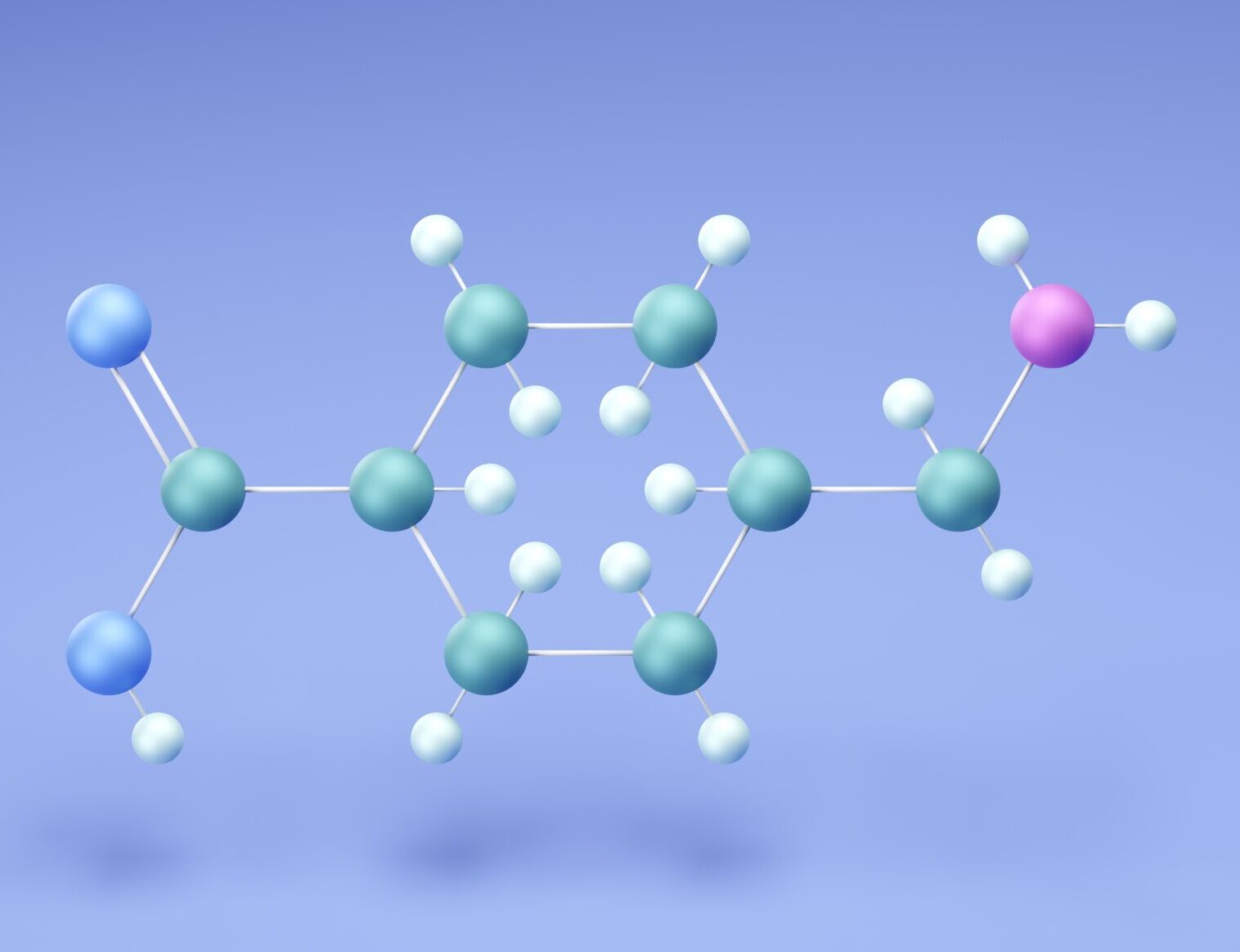
Tranexamic acid (TXA) has become a significant player in the management of perioperative bleeding — a pharmacological tool that has demonstrably reduced blood loss, transfusion requirements, and associated morbidity across a range of surgical contexts. Understanding its mechanism, clinical applications, and important safety considerations allows anesthesiologists and surgeons to deploy it judiciously as part of a comprehensive blood conservation strategy.
Mechanism of Action
TXA is a synthetic antifibrinolytic agent that works by competitively blocking the lysine-binding sites on plasminogen. Plasminogen is the precursor to plasmin — the enzyme responsible for fibrinolysis, the process by which the body dissolves blood clots. By preventing plasminogen from binding to fibrin surfaces, TXA prevents plasmin formation and stabilizes clots that have already formed. The result is reduced fibrinolysis and decreased hemorrhage at surgical and traumatic bleeding sites.
Clinical Applications
Cardiac Surgery
Cardiac surgery, particularly procedures involving cardiopulmonary bypass (CPB), involves profound activation of the fibrinolytic system as blood contacts the bypass circuit. TXA is highly effective in this context — reducing blood loss, transfusion requirements, reoperation for hemorrhage, and hospital length of stay. It is now standard of care in many cardiac surgery programs.
Orthopedic Surgery
Total hip and knee arthroplasty procedures are associated with significant blood loss that historically necessitated frequent allogenic blood transfusions. TXA — administered intravenously, orally, or topically (directly into the joint) — has dramatically reduced transfusion rates in joint replacement surgery. Multiple randomized trials and meta-analyses confirm its efficacy and safety in this setting.
Trauma
The landmark CRASH-2 trial established TXA's role in trauma management, demonstrating a significant reduction in mortality from bleeding when TXA was administered within three hours of injury. This time-sensitivity is critical: TXA administered after three hours showed no benefit and in some analyses showed harm, likely because the fibrinolytic process that it targets has already resolved. TXA is now included in most major trauma protocols as an early intervention.
Obstetrics
TXA has demonstrated efficacy in reducing postpartum hemorrhage, one of the leading causes of maternal mortality worldwide. The WOMAN trial showed reduced mortality from postpartum hemorrhage with TXA administration, particularly when given within three hours of delivery.
Pediatric Surgery
Weight-adjusted TXA dosing has been studied and used in pediatric cardiac and orthopedic procedures, with generally favorable results. Dosing protocols require careful adjustment given the pharmacokinetic differences in children.
Documented Benefits
TXA's clinical utility is well established:
- Significantly reduces intraoperative and postoperative blood loss
- Reduces the need for allogeneic blood transfusion — avoiding transfusion-associated complications including immunological reactions, infection transmission, and transfusion-related acute lung injury (TRALI)
- Can reduce operative time by limiting field obscuration from hemorrhage
- Lowers healthcare costs through reduced transfusion, reoperation, and complication rates
Safety and Thrombotic Risk
A key concern with any antifibrinolytic agent is whether preventing clot dissolution increases the risk of thrombotic complications — deep vein thrombosis, pulmonary embolism, stroke, or myocardial infarction. The evidence from multiple large trials is reassuring: TXA does not significantly increase the risk of thromboembolic events at recommended doses in most patient populations.
However, careful patient selection remains important. TXA should be used with particular caution — or avoided — in patients with:
- Prior history of thromboembolic disease
- Known hypercoagulable states
- Disseminated intravascular coagulation (DIC) — a contraindication
- Active intravascular clotting
Administration Routes
TXA can be administered via multiple routes depending on the clinical context:
- Intravenous: Most common perioperative route; provides rapid systemic levels
- Oral: Preoperative oral dosing has been studied for certain elective procedures
- Topical: Direct application to surgical wounds (particularly in joint arthroplasty) achieves high local concentrations with lower systemic levels — potentially favorable safety profile
Ongoing research continues to refine optimal dosing, timing, and protocol combinations to maximize efficacy while minimizing risk across diverse patient populations and surgical contexts.